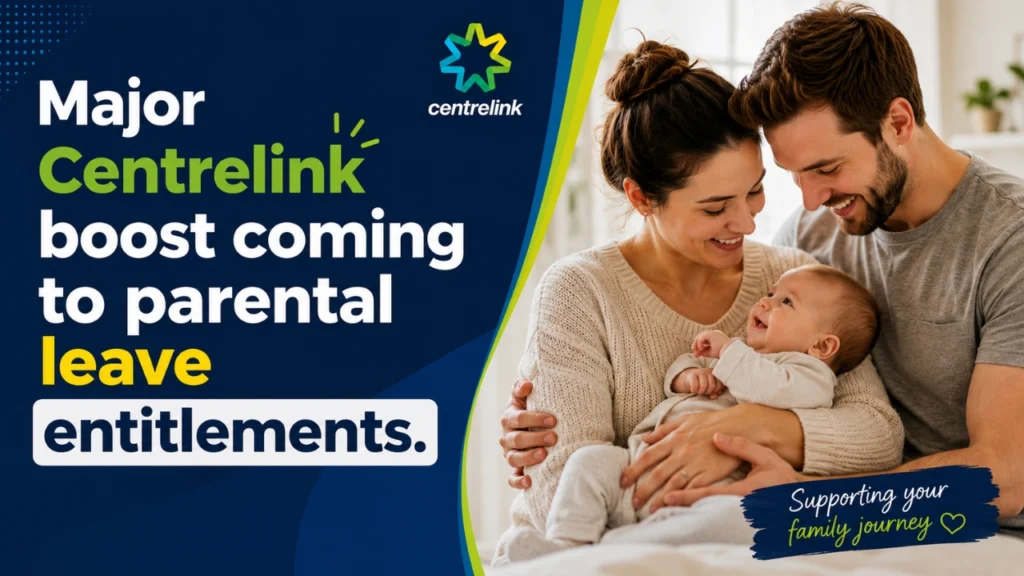
New parents across Australia are now getting more time — and more money — at home with their babies. From 1 July 2026, government-funded Parental Leave Pay through Centrelink rose to 26 weeks, or 130 days, for any child born or adopted on or after that date. It’s the final step in a four-year rollout that has steadily lifted the scheme from 20 weeks to where it stands today, and it puts a genuinely useful amount of extra money into family budgets during the newborn stage.
If you’re expecting a baby, adopting a child, or simply trying to make sense of how the payment works, here’s a clear, plain-English breakdown of what’s changed, what it’s worth, and who can claim it.
What Exactly Has Changed
Until 30 June 2026, families welcoming a child could receive up to 120 days of Parental Leave Pay, or 24 weeks. Anyone whose child arrived on or after 1 July 2026 now qualifies for the higher 130-day entitlement instead — an extra fortnight of paid support compared with the year before.
This didn’t happen overnight. The scheme has been growing by two weeks every year since 2024, moving from 20 weeks to 22, then to 24, and now to 26. Services Australia has confirmed this is the final scheduled increase under the current reforms, which means 26 weeks is set to become the new standard going forward rather than a one-off bump.
It’s also worth remembering that Parental Leave Pay is separate from the unpaid, job-protected leave families are entitled to under the Fair Work Act. Many parents combine the two, plus any paid leave their employer offers, to build a longer stretch of time off around a new baby.
How Much More Money Families Get
Parental Leave Pay is paid at the national minimum wage rate, which resets every 1 July. From 1 July 2026, that works out to roughly $200 a day, or just over $1,000 a week, before tax.
Across the full 130 days, that puts the new entitlement at approximately $26,127 before tax, compared with around $22,754 under the old 120-day entitlement the year before — a difference of roughly $3,373. Part of that gap comes from the 10 extra days themselves, which are worth at least $1,900 on their own, and part of it comes from the annual increase to the minimum wage, which lifts the value of every family’s payment regardless of when their child was born.
Key Facts at a Glance
| Detail | From 1 July 2026 | Before 1 July 2026 |
|---|---|---|
| Parental Leave Pay length | 130 days (26 weeks) | 120 days (24 weeks) |
| Applies to children born/adopted | On or after 1 July 2026 | 1 July 2025 – 30 June 2026 |
| Payment rate (daily) | ~$200 before tax | $189.62 before tax |
| Payment rate (weekly) | ~$1,005 before tax | $948.10 before tax |
| Full entitlement value | ~$26,127 before tax | ~$22,754 before tax |
| Superannuation on top | 12% (since 1 July 2025) | 12% (since 1 July 2025) |
| Days reserved for partner | 20 days | 15 days |
| Days couples can take together | Up to 20 days | Up to 10 days |
| Individual income limit | $186,487 (2026–27) | $180,007 (2024–25) |
| Combined family income limit | ~$386,525 (2026–27) | ~$373,094 (2024–25) |
| Administered by | Services Australia (Centrelink) | Services Australia (Centrelink) |
Sharing Leave Between Parents
Couples don’t have to choose one parent to take the whole 130 days. Twenty of those days are set aside specifically for the partner who isn’t the primary carer, on a use-it-or-lose-it basis, up from 15 days previously. If that parent doesn’t use their share, those days are forfeited rather than handed over to the other parent. Single parents aren’t affected by this rule and can access the full 130 days themselves.
The remaining days are flexible and can be split however suits the family best. Couples can also now take up to 20 days together at the same time, giving both parents the option of being home together for a stretch, rather than only handing the baby back and forth between them.
The payment doesn’t need to be used in one continuous block, either. Families can spread it across part-time return-to-work arrangements, take it in short chunks, or save some for later, as long as it’s used before the child’s second birthday. Parents can even work up to 10 “keeping in touch” days during the paid period without losing that day’s payment, which can make the transition back to work a little smoother.
Who Qualifies
Eligibility comes down to a work test, an income test, and a residency test. For the work test, the person claiming generally needs a consistent, recent work history in the period leading up to the birth or adoption. A more flexible version of this test applies to parents affected by a premature birth or pregnancy complications.
For the income test, the claiming parent needs an adjusted taxable income under $186,487 for the 2026–27 claim year. Families where one partner earns above that on their own may still qualify under a combined household income test, set at around $386,525. Claims also need to be lodged within 52 weeks of the birth or adoption, and standard residency rules apply.
Superannuation Is Now Included
Since 1 July 2025, the government has also been paying superannuation on top of Parental Leave Pay, at the standard 12 per cent rate. This closes a long-standing gap where parents who took time off to care for a newborn saw their retirement savings stall, even though they were doing genuine caring work during that period.
How to Claim
Parental Leave Pay is claimed through Centrelink, either online via myGov or through the Express Plus Centrelink app, and can be lodged up to three months before a baby’s due date. Families don’t need to submit a separate application for the extra 10 days — if a claim was lodged showing 120 days before the child’s actual birth, Services Australia adds the additional days automatically once proof of birth or entry into care is provided.
The Bottom Line
The jump to 26 weeks is welcome news for families budgeting around a new arrival, and it closes out a reform that’s been years in the making. Because every household’s income, work history, and leave-sharing plans are different, it’s worth using the Parental Leave Pay estimator on the Services Australia website or checking directly through myGov to see exactly how the new entitlement applies to your own situation.
Frequently Asked Questions
Does the 26-week entitlement apply to babies born before 1 July 2026?
No. Children born or adopted before that date remain on the 120-day (24-week) entitlement. Only births and adoptions from 1 July 2026 onward qualify for the full 130 days.
Can fathers and non-birth partners claim Parental Leave Pay?
Yes. A partner can claim their share of the leave, but only if the birth mother, or the primary claimant, also meets the scheme’s work test.
Do I need to reapply to get the extra 10 days?
No. If a claim was already lodged before the child’s birth, Services Australia updates the balance automatically once proof of the birth or adoption date is provided.
Is Parental Leave Pay taxable?
Yes. It’s treated as taxable income and paid before tax, similar to a normal wage, so it will appear on your tax return.
Passport & Pension Rules Updates 2026: A Centrelink Travel Guide for Seniors…